The Marketing Channel AI Can’t Commoditize written by John Jantsch read more at Duct Tape Marketing
Catch The Full Episode Overview Marketing output is up everywhere, and John Jantsch has good news about where to point it. AI has made it easy for anyone to put out decent marketing content, so the businesses that stand out now are the ones building genuine trust, not churning out more content. Buyers lean on […]
The Marketing Channel AI Can’t Commoditize written by John Jantsch read more at Duct Tape Marketing
Catch The Full Episode
Overview
Marketing output is up everywhere, and John Jantsch has good news about where to point it. AI has made it easy for anyone to put out decent marketing content, so the businesses that stand out now are the ones building genuine trust, not churning out more content. Buyers lean on AI engines to help them choose, which puts a premium on being the business people and machines both recommend.
Jantsch explains that the back half of the Marketing Hourglass (retention, repeat business, referrals) is where meaningful advantage lives now. He returns to three ideas from his 2010 book, The Referral Engine, still his bestselling book by the numbers, and shows why they matter more today than when he wrote them. The episode covers why people are wired to refer, how a simple referral system turns that instinct into growth, and why being referable comes down to a value proposition people love passing along.
This one’s for small business owners, agencies, and consultants ready to turn referrals into a growth engine instead of a happy accident. Jantsch walks through partner referrals, an underused channel, using his work with Mike Michalowicz’s Prosper Group as an example, and leaves listeners with two exercises to try this week.
About John Jantsch
John Jantsch is a marketing consultant, speaker, and Wall Street Journal bestselling author known for the Duct Tape Marketing system. He is the author of Duct Tape Marketing, The Referral Engine, and The Ultimate Marketing Engine, and hosts the Duct Tape Marketing Podcast.
Key Takeaways
- AI has made competent marketing cheap and widely available, making differentiation harder for buyers to spot
- Buyers increasingly rely on AI search engines and AI models for recommendations rather than doing their own comparison shopping
- Referrals are the most trusted lead type because they lower perceived risk, making referred customers less price sensitive
- A referral system requires two components: a process for asking, and a clear, easy to repeat explanation of the value you provide
- Partner referrals, meaning other businesses that share your ideal client, are a bigger opportunity than most people realize because one strategic partner can refer far more business than a single satisfied customer
Great Moments
- [00:02] – John opens with the core premise: marketing output is up, results are down, and AI has made his 2010 book more relevant than ever
- [02:23] – Why getting chosen has become harder, and why doubling down on retention and referrals matters more than chasing new leads
- [07:08] – The three ideas from The Referral Engine: people are wired to refer, referrals need a system, and referability depends on a clear value proposition
- [09:28] – Why partner referrals are a bigger opportunity than customer referrals, illustrated through the Mike Michalowicz Prosper Network partnership
- [12:12] – How AI models are pulling recommendations from customer reviews and social proof rather than traditional authority signals
Memorable Quotes
- “A referral is the most trusted lead in most cases.” — John Jantsch
- “No amount of systems or processes or great copy are necessarily going to generate referrals if you are not referable.” — John Jantsch
- “Machines are talking to machines now to make a referral, if you want to look at it that way.” — John Jantsch
- “The second half of the hourglass has become probably the most important element.” — John Jantsch
Resources
- The Referral Engine: Teaching Your Business to Market Itself by John Jantsch
- Profit First: A Simple System to Transform Any Business from a Cash-Eating Monster to a Money-Making Machine by Mike Michalowicz
- The Prosper Group — Mike Michalowicz’s business partnership program, referenced as a partner referral example
- DTM Business Advisor Program
John Jantsch (00:02.776)
So marketing output is way up everywhere, right? But results are kind of down. Phones are ringing less than they did two years ago. I wrote a book in the and 2010, and I think the answer to this challenge is sitting in that book that I wrote then. And I’ll explain why AI has made that book possibly more relevant than ever. Hello and welcome to another episode of the Duct Tape Marketing Podcast.
This is John Jantsch. I’m doing a solo show. let’s title this AI Just Made Referrals, Your Most Important Channel. So let’s dig in. So as I said at the outset, AI has made competent marketing cheap, passable marketing. Everyone can produce decent content, email ads, I mean, in an afternoon. Now, what nobody says is everybody’s working harder than they did before because they’re trying to manage the machine now. But
Fact of the matter is everybody jumped in, everybody sounds the same now. You know, buyers can tell you, can’t really tell who’s good or not good anymore. the way that they search now, they’re depending and relying on the AI engines to actually give them recommendations. ad costs are doing two things. Ads are doing two things. used to be a really reliable channel. Now ad costs are soaring and their effectiveness is way down. I mean, we
We certainly are seeing that with many of our clients and we’re seeing it ourselves. But I think the biggest thing is that buyer behavior has changed, and I think that that is going to really make a a really shift in marketing from, you know, I talked about many, many years ago I created the marketing hourglass. The idea being that, you know, most people focus on the front half or the top half of that, no like trust, try.
that that you know, getting the phone to ring, getting leads generated. And I’ve said for many, many years that it’s the back half of that. When somebody buys, when they repeat, when they refer, you know, those are the stages of the buyer journey that we really need to be focused on today. it’s hard to get chosen today, with a lot of what’s going on, you know, the noise, the just the fact that, you know, if if AI
John Jantsch (02:23.727)
it doesn’t include you in the short list, you know, somebody may never come to your website or check you out. And so, you know, getting chosen has become more difficult. But what that really means, I think, is instead of doubling down on getting chosen, maybe double down on retention, on repeat business with those ideal clients, and and certainly on a systematic approach to referrals. The top half of the hourglass, you know, the lead generation part has gotten really cheap, but it’s gotten less effective. So
Again, as I said, the second half of the hourglass has become probably the most important element. You know, I told you in the intro that a book that I wrote in 2010. Most people certainly, if you were gonna ask a lot of people that follow me at all, they would say, well, Dark Tape Marketing’s your best book, right, or your best-selling book, or certainly the one you’re known for. I mean, it’s frankly, it’s the name of this podcast, it’s the name of of you know my website, it’s the name of my business, quite frankly. So
But however, the book that I wrote in twenty ten, The Referral Engine, Teaching Your Business to Market Itself, is is actually in terms of pure numbers my best selling book. And a lot of people wouldn’t wouldn’t know that. But I think it really it still sells well today. and I think what that really is a testament to is it’s evergreen. The idea of of referrals is evergreen. it doesn’t take Twitter necessarily to get to a referral. And I think that that’s really
At the foundation of this, because a referral is the most trusted lead in most cases. It’s a lead that comes to you expecting to pay a premium or at least not price sensitive because somebody has told them, somebody they trust already, even if it was in a review of somebody they didn’t know, talked about the fact that you solved that problem. That was proof. You were just saying it in your marketing. Somebody else said it about you. And I think that that.
really leads people because in a lot of cases people aren’t that they’re not completely price sensitive, especially for, you know, trying to solve a big expensive problem, but they’re risk averse. And so it it it lowers the risk. And because of that, they’re willing to pay more. because let’s face it, I mean, going with the low price leader, you know, involves a lot of risk. If that’s the only
John Jantsch (04:44.303)
decision or or that’s the only data point that that you’re using. And so I think a lot of people are okay with paying more if they can actually feel that that risk of a total failure. and and it’s not just money. I mean it’s it’s time, it’s energy, it’s what we’ve invested. You know, we we get pitched every single day, as I’m sure many of you do as well, on services that want to generate leads for us. And you know, a lot of the pitches or a lot of the value
Proposition pitch is that, hey, we’ll generate 10 appointments and if they aren’t good, you don’t pay a thing. Well, it really kind of belies the fact that you put a ton of energy, you put a ton of your reputation, you know, into getting some sort of cold outreach thing going. And if it flops, okay, you didn’t pay the service to do it, but now you’ve lost opportunity, you’ve lost time, maybe you’ve sullied your reputation in the process. And I think that a lot of people.
Don’t really talk about those types of costs when you know people are really pitching you. So here are three ideas from the book that I think matter the most now. people are wired to refer. I have said this for many, many years. Now it’s not everyone, but certainly a lot of people, if they’ve had a great experience, if they have something unexpected has happened to them along the way, they will talk about it. And so that’s what I mean we’re wired.
refer there there certainly are those people out there that are connectors i mean that’s they get a lot of juice from that idea of of being able to induce people but i think the real thing is if somebody’s had an exceptional experience they they are wired to talk about it most businesses that are doing anything halfway decent are getting some amount of referrals it’s you know it’s unpredictable it’s accidental you know it’s hope that that they get those and so
what this book, what the book introduced is the the idea that you need to create a system around it. It needs to be intentional. You need to have processes in place that actually make sure that you are taking advantage of your referability. I mean, this is not about tricking people into referring you. You’ve got to do that first half. You’ve got to have a referral service, you have to be referable. but once you are, then you have to amplify that referrability.
John Jantsch (07:08.587)
And I think that I I, you know, that’s point number three. I kind of stepped on stepped on it. But I mean, I think that’s really the the key there is no amount of systems or processes or great copy, you know, are necessarily going to generate referrals if you’re not referable. And a lot of that referrability comes down to being able to communicate what it is that you do that would be of value.
to the person, like what’s in it for them in a lot of ways. That’s always going to be a consideration, even if what’s in it for them is they just want to help their friend out, or maybe they just want to help you out. But they’ve got to understand what that value exchange is going to be, is going to contain. This is a piece a lot of people miss. I mean they miss this in marketing in general. Your value proposition or what you are going to do when you are referred has to be easy for them to understand and therefore easy
For them to explain. You put those two comp those two things together. a system where you are actually asking for referrals and then a way to actually teach somebody why they should refer you and how they should refer you. and you really are very far along the path. Now, there are many other things that you can build into this. You can build timing, you know, like when to ask for referrals, you know, especially with customers. there’s always going to be kind of
moments of truth when you want to ask for them. You can build tools. You know, having web pages, they they don’t necessarily have to be open to the general public, but when somebody wants to refer you, just say, hey, send your friend to this page. Make it really easy for them as well. And I and you know I’m gonna I’m gonna finish this with a a few just kind of steps that I think everybody should take. But we actually I want to tell you you know I love customer refer
Referrals, but I think the real hidden opportunity that most people don’t tap is in partner referrals. So other businesses that have your same ideal client as a client or prospect are are really the richest sources for referrals. And the reason I say that is because a a good customer might know two or three people, two or three businesses they could refer you to.
John Jantsch (09:28.223)
strategic partner business might have a hundred that they could refer you to over time. And so I think that that is is reason enough to really focus on that channel. And I think most people when they think of referrals, they just go after their customers. And again, they know how brilliant you are. It’s an obvious channel, but the real goal is if you could do develop a system to go after businesses that could refer you as well. So
for one example, many of you know Mike McAllowitz, author of Profit First. he also has a network that’s called the Prosper Network, where he actually helps businesses turn their businesses around and grow them and you know apply a lot of the the things from his books to those businesses. Well he
has you know seen that in many cases a lot of their clients stumble because marketing. They don’t have a strategic approach to marketing. They’ve hired agencies or they’ve hired people to to do their marketing. And just because not everybody takes a strategic approach, it just feels like kind of tactic of the week. So Mike has started bringing businesses to us to actually do a strategic audit.
on their business, a marketing audit on their business, and then make recommendations that frankly have turned into fractional CFO or CMO engagements. I think we’re working with three businesses of his with there’s another advisor group out there business advisor group that is starting to send us businesses. So we formalized this. I mean frankly it came about because of the relationship.
that I have with Mike as as many things do, but we’ve now formalized this. So we actually have an offering. We have a web page for it. We’re actually out there pitching, you know, other like EOS implementers and profit first professionals and fractional CFOs because they really are running up against the fact that marketing is is a is is always going to be a hurdle in trying to help a business grow and expand or exit. And so we can help them patch that.
John Jantsch (11:34.772)
And I think that a lot of it has to do with our approach. we are not just coming to them as a typical agency. I mean, our approach is more closely aligned with their business advising because we always start with strategy. But again, that’s really just an example of a way that you can structure one of those that can can really turn into a in some cases, you know, a very steady stream of of referrals.
John Jantsch (12:05.751)
Another kind of twist on the whole AI environment that we’re in.
John Jantsch (12:12.337)
testimonials, case studies, referrals, reviews, you know, all of these things have always been very important from a social proof standpoint. But increasingly what you’re seeing is people are turning to even the the search engines, which are now very powered by AI, or they’re turning to an actual AI model. and they’re putting very long like criteria. Here’s what I’m looking for. Well
Guess where a lot of those AI models are driving or or deriving, you know, the recommendations? They’re not necessarily like in the old days where it was like, well, you have the most authority, you’ve done the best SEOs, and now you’re going to win. They’re actually diving deep into voice of customer, what customers are saying in reviews, what they’re saying on social media sites, what they’re saying in Reddit. and they’re using that to compile who those are. So some of those businesses aren’t necessarily.
the biggest or the been around the longest or have the most you know spend in in marketing, a lot of cases they’re the ones that have really done a good job mining and amplifying what it is that their customers are actually saying about them. So machines are talking to machines now to make a referral, if you want to look at it that way. And so a lot of the energy that you might spend on building assets around referrals, on amplifying your case studies, on getting video testimonials, those are actually going to be
AI referral assets as well. So
Here’s your homework. Ask three AI assistants who they’d recommend for your category and compare that to what your customers say. That’s really where some of the gap’s going to be. So
John Jantsch (13:57.271)
Track, here’s another good exercise for you. Track the last 10 customer sources, like where they came from. and really think in terms of, you know, in the experience of onboarding, in the experience of getting that customer going, are there are there trackable moments or talkable moments where you could actually say, this is a place where we should start asking for a referral, for example. And then start thinking about who are those strategic partners out there.
Some of whom you might actually be working with already in some cases, that you could really start thinking about a formal program. If you want to learn more about our advisor program, how we’ve structured structured it to work with advisors, business advisors, it’s just dtm.world slash B A, like business advisors. So DTM.world slash business advisors. So
That’s all I have for today. hopefully this gets you thinking a little harder about the idea of referrals and what referrals where the the role that they’re going to play and do play, I think in this AI era is going to become increasingly significant. and I think just I guess just go buy my book. That would be that would be the easiest, fastest one. But actually, if you want us to design a system for you, if you wanna if you are a business advisor.
and you’d like to learn how we could work with your clients, those are all things that we’d love to do. just send us an email. All right, take care.
Sign up to receive email updates
Enter your name and email address below and I’ll send you periodic updates about the podcast.
Recommended Story For You :

How To Make $3493 Commissions Without Doing Any Selling

Successful dropshippers have reliable suppliers.
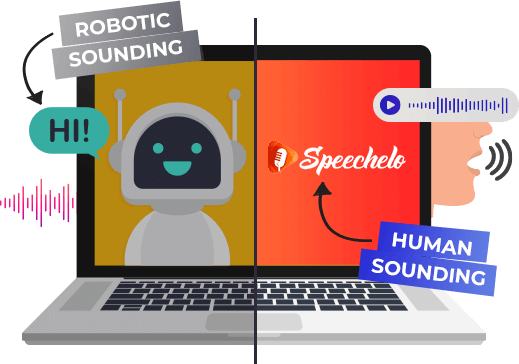
People Think I Use A Professional Voiceover Artist. NO! I Just Use Speechelo!

Make Money Testing Apps On Your Phone Or Tablet

Make More Money or Lose Everything

Sqribble Is The ONLY eBook Creator You’ll Ever Need.

Work & Earn as an Online Assistant
Create Ongoing Income Streams Of $500 To $1000 Or More Per Day

It's The Internet's Easiest Side Business.